













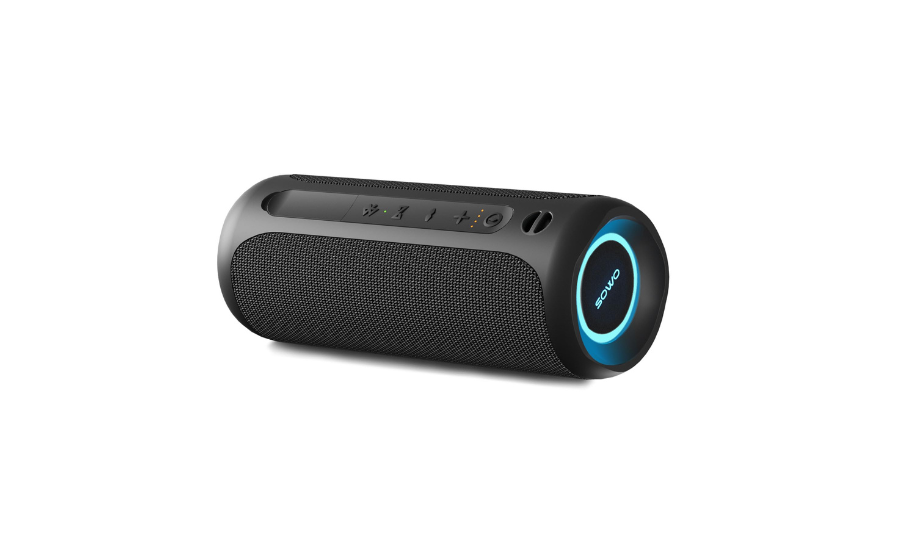
A Bluetooth speaker is a great way to take your favourite music with you anywhere. A great idea during the holidays, but not only. It is indispensable especially in a tent, on the beach and camping and wherever access to electricity is very limited. It is also a good alternative to heavy and large sound equipment used at home.
But what if the next charge of the device is enough for only a few minutes of listening to music? It is a sure sign that it is time to start looking for the right accessories for your speaker. These include Bluetooth speaker batteries, which will give your device a new lease of life. It will allow you to use your cordless speakers again for hours without a cable and away from a wall socket.
How to choose a battery for a Bluetooth speaker?
On the market, you can find a huge number of models of speakers, and each of them is powered by a specific type of cell. How to choose a Bluetooth speaker battery that will certainly fit your type of device?
The safest method is simply to remove the old cell. You can then check all the desired parameters – these can be found on the nameplate.
The most important parameter of the cell is the voltage. In a new battery, it should be identical to the voltage of the old cell. Otherwise, you risk damaging your equipment.
Before buying a particular cell, you should also consider whether you are satisfied with the operating time of the speaker. If you intend to take the equipment on longer trips, a good option is to buy a cell with a higher capacity than the previous one.
Cell capacity is measured in milliampere-hours (mAh). In our range, for example, you can find a Bluetooth speakers battery with a capacity of up to 10,200 mAh, which will allow you to play music for up to 18 hours straight!
Removing the old cell is also an opportunity to check the type of plug used in your device. It is important – the wrong connector will make it impossible to plug in the cell. Also, pay close attention to the order of the coloured wires. They indicate the polarity of the battery. Incorrect connection of cables can damage the speaker.
How to estimate battery life?
I am building a portable speaker, how would I go about estimating the current drawn from the speakers/or amplifier at a certain volume, using a millimetre?
There are a lot of factors involved and different kinds of music have different energy levels, but here’s a way to make a ballpark estimate:
- Calculate 1% of the amplifier’s rated RMS power in watts (20 dB below rated RMS)
- Add another 2% of the amplifier’s rated RMS power in watts for base-level power requirements
- Use this 3% of power along with the battery in this calculator to get current in milliamperes (ma)
- Divide the battery capacity in mAh (milliampere-hours) to get the approximate running time.
This is for a moderate listening level using a typical Class D card-style amplifier. If you want the music to be as ear-splittingly loud as possible–use 10% of amplifier power in item 1.
I just built a boombox powered by a battery, and went through all the steps described above. You’re basically going to have to:
- Make sure the voltage of the battery will supply the amplifier. Match it perfectly if you can, but most amplifiers will run on slightly lower voltage. I do not recommend running the amplifier at a higher voltage than it’s rated for–you’ll risk damage. Especially in a boombox setting where Joe Schmo is liable to turn it up to eleven without a thought.
- Find out how much current (amperes) your amplifier draws, on average. This is an important number! If we’re talking about a basic Class-D amplifier, you’re likely to be pulling 1/4 of the sum (all channels) of your max rated wattage on AVERAGE. (With class D higher volumes draw more power, lower volumes less) DIVIDE AVERAGE WATTS BY VOLTAGE going to the amplifier, and you have average CURRENT. Of course, average only tells us so much. If you want to be pleasantly suprised by your battery life later down the line, calculate your current draw using 1/2 of max, 5/8 of max, and so on.
- Find a battery that’ll suit your needs. All batteries have two parameters you’ll need to pay attention to for the purposes of battery life. These are the Voltage (match to the amplifier, or slightly under) and Capacity, in Ampere-hours (Ah, sometimes done in mAh which you can divide by 1,000 to get Ah). The number means how long the battery will last (hours) when providing a current draw of 1 ampere. The amplifier will draw however much current (amperes) it needs while in operation.

